Metalworking Companies Are Becoming Software Companies (Whether You Like It or Not)
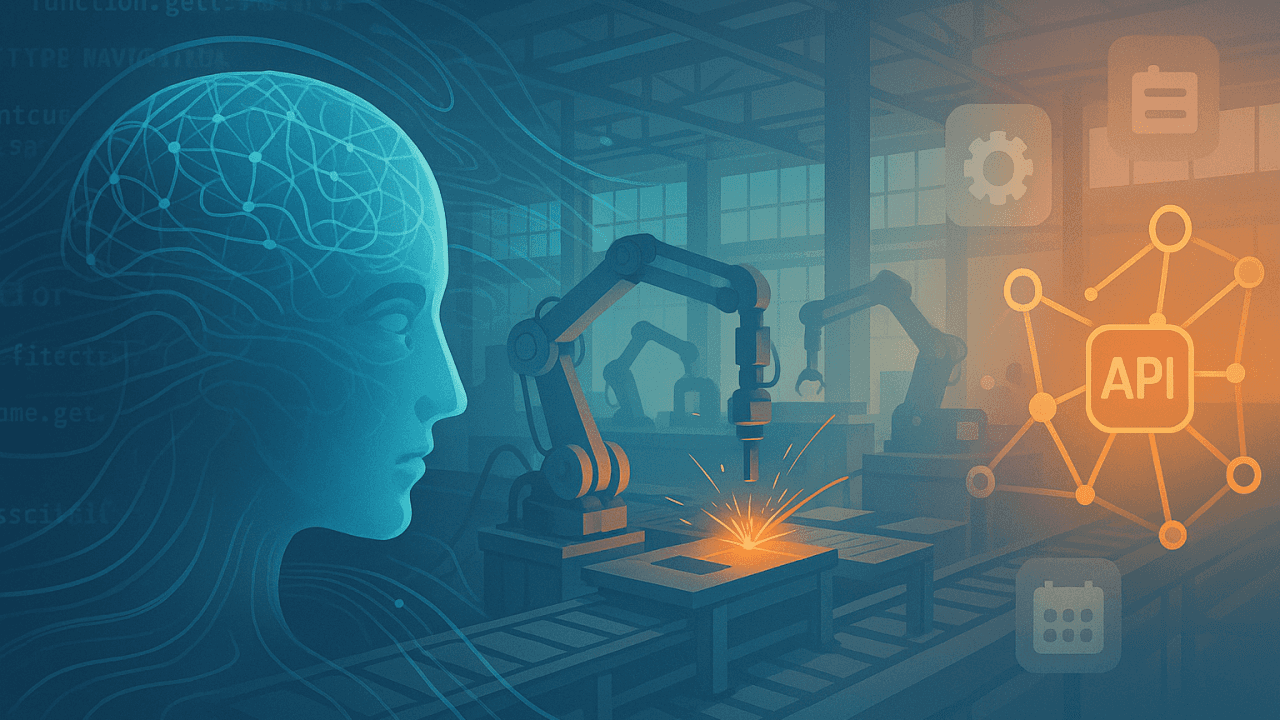
Metalworking companies are becoming software companies because AI and "vibe coding" are shifting us from buying fixed systems (ERP, CRM, MES) to describing what we need and having AI write the code. This means metalworkers will soon own their own software logic-the rules, workflows, and intelligence that run their business-making software development a core manufacturing competency rather than an IT department problem.
A strange sentence to start with, I know. But if you look closely at what's happening with AI and "vibe coding", it's exactly where we're heading.
And if you're running a metalworking company, this shift has direct impact on your quoting, your systems, and how your customers will work with you in the next few years.
The Real Shift: From "Buying Systems" to "Describing What You Need"
Right now, most companies still think like this:
- "We need a new ERP."
- "Maybe a better CRM."
- "Should we invest in a MES or planning system?"
We've been trained for decades to think in software categories: ERP, CRM, MES, PLM, PDM, scheduling, inventory, you name it.
But that's not the real game anymore.
What's actually changing is this:
We're moving from selecting systems to describing outcomes in natural language – and letting AI generate the software, interface and logic on the fly.
That's what tools like Lovable (used by Laurens Singeling, who inspired this livestream) already demonstrate: you type what you want in normal language, and the AI generates a working application – including database, logic, and UI – in minutes.
It's not perfect yet. But it's improving fast. And, importantly: it's good enough to start replacing a lot of generic systems.
Why Today's System Landscape Is Unsustainable
Let's look at how most metalworking businesses actually work today:
- You receive drawings and 3D models by email
- Someone interprets manufacturability and risks using their experience
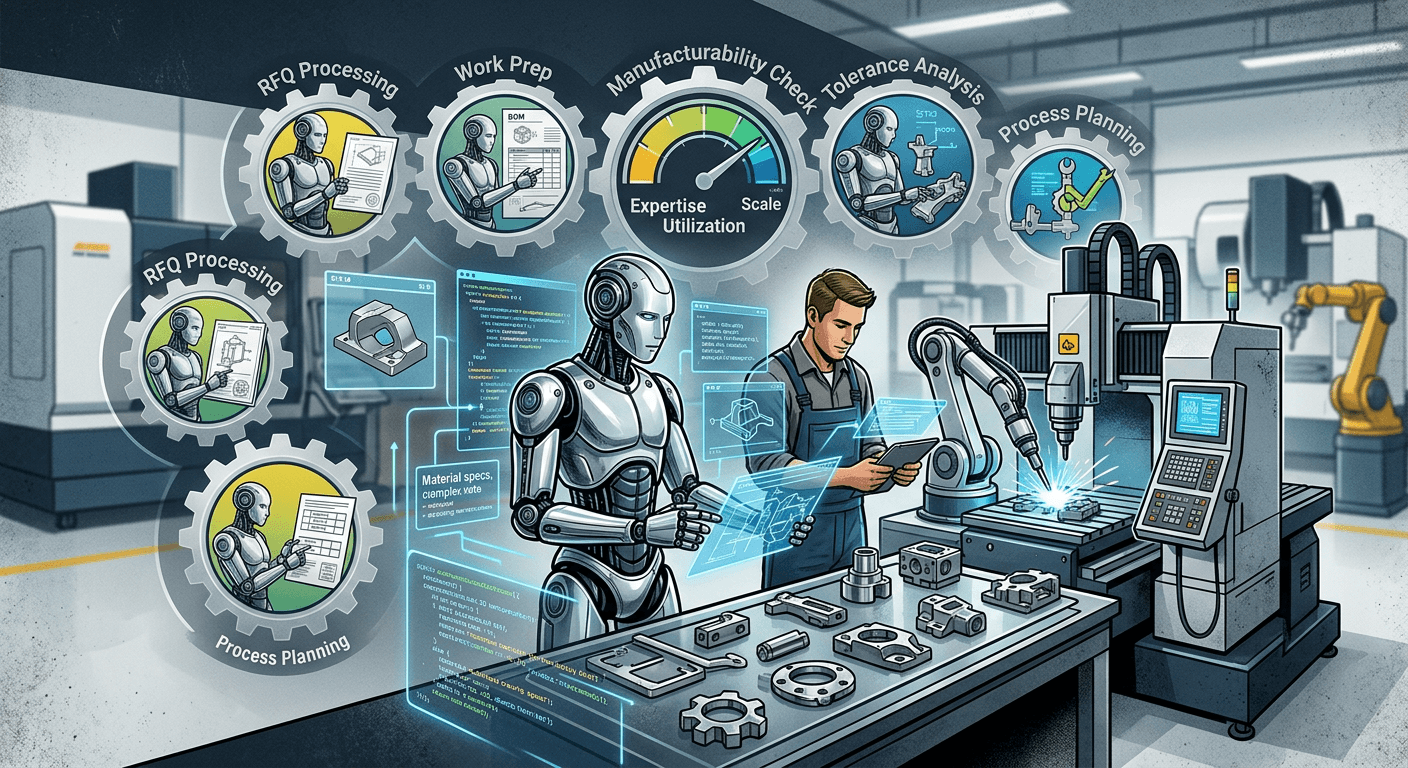
- You juggle Excel, CAM, ERP, email, and phone calls to get a quote out
- You depend on a few experts for estimation and order engineering
- Data gets retyped into different systems, often with mistakes
- Your quoting speed, accuracy and margin basically depend on individuals, not a system
This whole ecosystem is held together by people, spreadsheets, and generic systems that primarily exist because:
- Vendors needed a category to position and market themselves (ERP, CRM, MES, etc.)
- Buyers needed something to search for ("we need a new ERP")
But if AI can generate exactly the workflow you need, for your specific factory, for your specific operators… why would you still buy a generic system with a fixed interface and a fixed way of working?
Most ERP and CRM systems don't add real intelligence. They're just structured forms and tables with a bit of workflow on top.
In an AI-first world, that's not enough to justify their existence.
The End of the App Store (and Why That Matters for Industry)
Take the logic one step further.
If you can describe what you want in natural language and have AI generate:
- the code
- the user interface
- the logic
- the data connections
…then why would you still "install" an app?
Tomorrow's reality looks more like this:
- You – or your AI assistant – says what you need ("show me all orders that risk missing their deadline and automatically propose actions").
- The AI dynamically builds the mini-app for that task, using existing APIs and services.
- You use it once, maybe refine it, and then move on.
- Next time you need something slightly different, it builds a new variant.
No static app. No App Store. No fixed "system" you're stuck with for ten years.
This is what some people call replatforming: the platform is no longer the OS or the app, but a dynamic AI layer that composes what you need, when you need it.
So What Survives? Your Business Logic in the Form of APIs
If static systems and user interfaces disappear, what remains?
Two things become critical:
- Your business logic
- Your ability to expose that logic as APIs that AI agents can work with
In other words:
The competitive advantage won't be "which ERP you use", but how well your logic is structured, accessible, and automatable.
This has big consequences:
- Customer self-service will still grow – but not via portals, rather via the customer's own AI that uses your APIs.
- Generic, one-size-fits-all systems lose relevance.
- Specialized, high-value vertical services (e.g. shape recognition, unfolding, feature detection, toolpath generation, pricing models) become "ingredients" that AI combines on demand.
The UI becomes temporary. The systems become invisible. The API and the underlying model become the real product.
How Quoting and Order Intake Fit Into This Future
Let's zoom in on the front-end of your business: inquiry → quote → order → production.
Today, in most mid-sized metalworking companies:
- Understanding the inquiry is manual
- Manufacturability checks depend on a few experts
- Quoting is slow and inconsistent
- Data transfer to ERP/CAM is manual and error-prone
This is exactly where automation and structure are needed before AI agents can do their work reliably.
At Quotation Factory, we've been building:
- Shape & feature recognition: to understand parts in minutes instead of hours
- A virtual factory model: to map inquiries to your actual capabilities
- Automated estimations and quoting: to make pricing reliable and scalable
- Deep ERP/CAM integration: so data flows without manual retyping
Today, that shows up as a platform and a self-service portal. Tomorrow, the form may change (more AI agents, less visible UI), but the logic and structure behind it become even more important.
Because an AI agent can only help your customer if:
- your rules are clear,
- your data is structured,
- and your capabilities are exposed in a machine-readable way.
From Average Teams to Top Teams
Here's the contrast I see in the market:
Average teams:
- Keep buying new systems hoping "this one will finally fix it"
- Add another portal instead of rethinking the flow
- Patch problems with manual work and heroics
- Talk about ERP/CRM/MES instead of talking about customer flow
Top teams:
- Start from the customer's journey: inquiry → quote → order → delivery
- Structure their data and logic so it can be automated
- Design their processes first, then choose tools
- Expose their capabilities as APIs so AI (theirs and the customer's) can interact with them
- See themselves increasingly as software-enabled metal companies, not just metal companies that "also use software"
Those top teams will be ready when AI agents become the default way of doing business.
What This Means for You (And What We're Doing at Quotation Factory)
For us at Quotation Factory, this isn't a theoretical discussion.
We're actively:
- Re-examining our platform through this new lens
- Making sure our logic, models and APIs are "AI- and agent-friendly"
- Thinking beyond portals to "AI at the customer's side" that can still work seamlessly with your factory
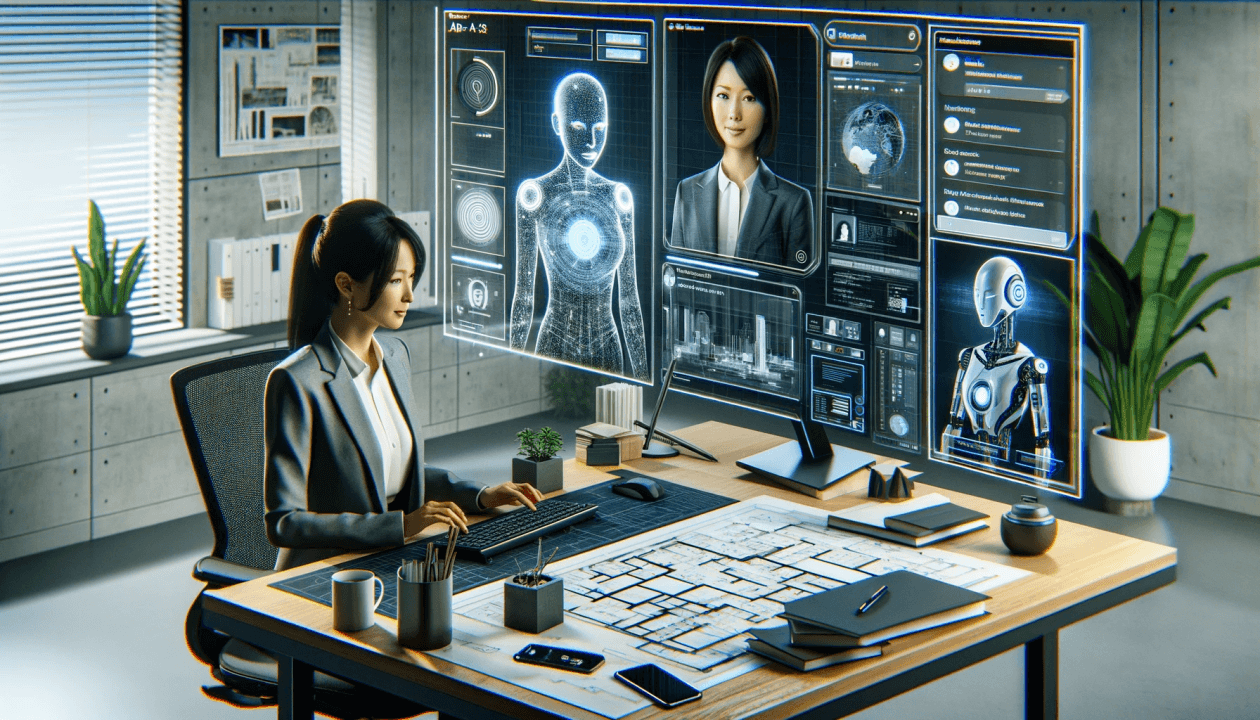
Because in this new era, our role is not just "a tool to generate quotes". Our role is to be the translation layer between your customer's intent and your factory's capabilities – in whatever interface or AI environment the future brings.
Want to See This in Practice?
Soon I'll sit down with Laurens Singeling to show a concrete example:
- How he uses vibe coding to create his own manufacturing execution environment
- How he connects different services and APIs in minutes
- And what that means for the future of generic systems in our industry
If you're curious how all of this could work for your own metalworking business:
- Follow me here on LinkedIn – I'll share the session with Laurens when it's live
- Or send me a message if you want to explore how to make your inquiry-to-order flow ready for this AI-driven, API-first world.
Because like it or not:
Metalworking companies are becoming software companies. The question is not if – it's how ready you'll be when it happens.